


Cruise vacations are one of the most relaxing ways to travel, but they also come with unique risks. A cruise involves multiple destinations, strict schedules, and limited medical facilities while at sea. Even a small issue, such as a missed departure or sudden illness, can turn an enjoyable trip into a costly experience. This is why travel insurance for cruise trips is an important part of planning, not an optional extra.
Unlike regular travel, cruises have specific challenges that standard travel insurance may not fully cover. Medical treatment on a cruise ship can be expensive, and emergency evacuation from the ship can cost thousands of dollars. Weather changes, port cancellations, or itinerary changes can also affect your trip. Cruise travel insurance helps protect your prepaid costs and gives you financial support when unexpected problems arise.

Why Travel Insurance for a Cruise?
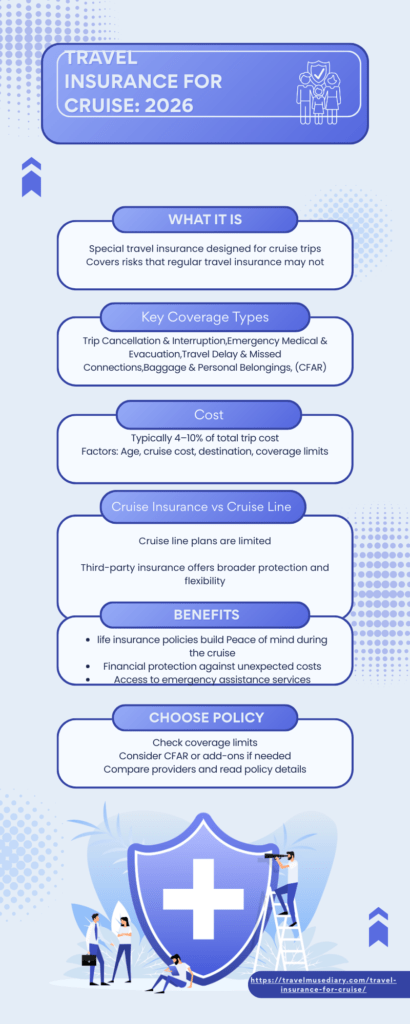
Travel insurance for cruise is a type of travel protection designed to cover risks that are specific to cruise vacations. High profile mechanical failures were reported in cruise season of 2025.They included powerless drifting of the Norwegian in the Hudson River ,and the MSC World Europa cruise ship experienced a loss of propulsion near the coast of Italy due to an electrical failure, highlighting the importance of cruise travel safety and comprehensive travel insurance coverage.
Many first-time cruise travelers make the mistake of booking tight same-day flights, assuming everything will go smoothly.
Another issue is cruise-line insurance. Most policies only cover the sailing dates and may not protect you before boarding or after leaving the ship.
It’s better to have a plan that covers your entire vacation—from the moment you book until you return home. This way, you’re protected against flight delays, lost baggage, and other unexpected problems.
Key Types of Cruise Travel Insurance Coverage
Cruise travel insurance includes several important coverage types that protect travelers from common and costly problems. One of the most important benefits is trip cancellation insurance. This coverage helps you recover prepaid and non-refundable expenses if you must cancel your cruise due to covered reasons such as illness, injury, or a family emergency.
Trip interruption coverage is also essential for cruise vacations. If your trip is cut short due to a medical emergency, severe weather, or another covered event, this benefit can help pay for unused cruise days and additional travel costs. Travel delay and missed connection coverage are especially valuable for cruises because ships follow fixed schedules. If your flight is delayed and you miss the ship’s departure, this coverage can help pay for transportation and lodging to catch up at the next port.
Medical and emergency evacuation coverage is another critical part of cruise insurance coverage. Medical treatment onboard a cruise ship can be expensive, and many health insurance plans do not provide coverage outside your home country.
Emergency Medical and Evacuation Coverage for Cruises
Emergency medical evacuation coverage is especially critical for cruise travelers. If you experience a serious medical condition, you may need to be transported from the ship to a hospital on land. In some cases, this can involve air or sea evacuation, which can cost tens of thousands of dollars. Cruise insurance policies usually cover these evacuation costs and arrange transportation to the nearest appropriate medical facility.
This type of coverage also provides access to emergency assistance services. These services help coordinate medical care, hospital transfers, and communication with family members. Having emergency medical and evacuation coverage ensures that you receive timely care without facing heavy financial stress. For cruises that visit remote destinations or multiple countries, this coverage is not just helpful but essential.
Travel Delay and Missed Connection Coverage
Travel delay and missed connection coverage is especially important for cruise vacations because cruises follow fixed schedules. If your flight is delayed due to bad weather, technical issues, or airline problems, you may miss your ship’s departure. Travel insurance for cruise with missed connection coverage can help pay for transportation, meals, and hotel stays while you arrange to join the cruise at the next port.
Travel delay coverage also helps when your trip is disrupted for several hours or longer. This may happen due to flight cancellations, port delays, or unexpected schedule changes. With this coverage, you can receive reimbursement for essential expenses such as accommodation, food, and local transportation. These costs can add up quickly, especially in busy cruise ports or international destinations.
Many cruise insurance policies include travel delay benefits as part of standard coverage, but limits may vary. It is important to review the policy details to understand how many hours of delay are required before benefits apply. For travelers with connecting flights or long-distance travel to the port of departure, this coverage provides valuable financial protection and reduces stress during unexpected disruptions.
Baggage Loss and Personal Belongings Coverage
Baggage loss and personal belongings coverage protects you if your luggage is lost, stolen, or damaged during your cruise trip. Cruises often involve flights, transfers, and multiple ports, which increases the chances of baggage delays or mishandling. Travel insurance for cruise helps cover the cost of replacing essential items if your bags do not arrive on time or are permanently lost.
This coverage usually includes reimbursement for clothing, toiletries, and other personal items you need while waiting for your luggage. Some policies also cover valuables such as electronics, cameras, and travel documents, up to specific limits. Having baggage coverage is especially useful on cruises because formal nights, shore excursions, and special activities may require specific clothing or gear.
Many cruise insurance palns also offer baggage delay benefits. This means you can receive compensation if your luggage is delayed for a certain number of hours. Reviewing coverage limits and exclusions is important, as high-value items may require additional protection. Baggage and personal belongings coverage adds another layer of security and convenience to your plan of travel insurance for cruise.
Cost of Travel Insurance for a Cruise
The cost of travel insurance for cruise usually depends on the total price of your trip. In most cases, cruise travel insurance costs between four and ten percent of the total trip cost. This includes cruise fares, flights, hotels, and prepaid excursions. For example, a higher-priced luxury cruise or an international itinerary will usually have a higher insurance premium.
For 2026,Carol Mueller an advisor at (BHTP) , recommends higher coverage for travelers. She suggests having up to $750,000 for emergency evacuation and repatriation to ensure adequate protection.
Several factors affect the price of cruise insurance coverage. These include the traveler’s age, length of the cruise, destination, and coverage limits. Plans with higher medical coverage, emergency evacuation benefits, or Cancel For Any Reason options cost more. Travelers with pre-existing medical conditions may also need to purchase coverage within a specific time frame to qualify for a waiver.Choosing a plan that balances cost and coverage helps ensure you are protected without paying for unnecessary extras.
How to Choose the Right Travel Insurance for Cruise
Choosing the right travel insurance for cruise requires careful consideration of your trip and personal needs. Start by reviewing what the policy covers, including trip cancellation, trip interruption, medical emergencies, and baggage loss. Make sure the coverage limits are high enough to protect your investment in the cruise and any related travel costs.
Consider optional add-ons such as Cancel For Any Reason (CFAR) coverage, which allows more flexibility if your plans change for non-covered reasons. Travelers with pre-existing medical conditions should check if the policy offers a waiver and purchase insurance within the required time frame to qualify.
It’s also important to compare cruise insurance providers. Look for companies with strong reputations, clear policies, and reliable customer service. Reading reviews and understanding exclusions can help you avoid surprises. By carefully evaluating coverage options and costs, you can select a cruise travel insurance plan that provides peace of mind and protects you against common travel risks.
Our services provide complete guidance from comparing to executing your insurance plans.
Cruise Insurance vs Cruise Line Protection
Many travelers assume that the cruise line’s own protection plan is enough, but it often has limitations. Cruise line protection may cover basic trip cancellations or onboard emergencies, but it usually does not include comprehensive medical coverage, emergency evacuation, or travel delays. Third-party cruise travel insurance provides broader protection and can cover situations that the cruise line’s plan may exclude.
One key difference is flexibility. Independent cruise insurance policies allow you to choose coverage levels, add optional benefits like Cancel For Any Reason (CFAR), and include multiple destinations or pre- and post-cruise travel. Cruise line plans are often fixed and may not cover expenses incurred before you board the ship.
For international or long-duration cruises, third-party cruise insurance is often the safer choice. It ensures coverage for medical emergencies, travel delays, missed connections, and lost baggage. By understanding the difference, travelers can make an informed decision and avoid unexpected costs while enjoying their cruise.
Common Misconceptions About Cruise Travel Insurance
Many travelers believe that their regular travel or health insurance automatically covers cruise trips, but this is often not true. Standard travel insurance may not include medical care on a cruise ship or emergency evacuation from international waters.
Another common misconception is that cruise line protection is enough. While cruise lines offer their own insurance plans, these policies usually have limited coverage and high exclusions. They may not cover trip interruption, missed connections, or pre-existing medical conditions.
Frequently Asked Questions About Cruise Travel Insurance

Is travel insurance for cruise mandatory?
No,travel insurance for cruise is not required by law, but many cruise lines strongly recommend it. Having insurance protects you from unexpected expenses such as medical emergencies, trip cancellations, and lost baggage.
How Much Does it Cost?
Typically costs 12-14% of your total trip cost.
Does regular travel insurance cover cruises?
Not always. Standard travel insurance may provide some coverage, but it often does not include cruise-specific risks like missed ship departures or onboard medical emergencies. A cruise-specific policy is usually more comprehensive.
What is Cancel For Any Reason (CFAR) coverage?
CFAR is an optional add-on that allows you to cancel your cruise for reasons not listed in the standard policy. It typically reimburses a portion of your prepaid expenses and offers extra flexibility, though it comes at a higher cost.
When should I buy travel insurance for cruise?
It is best to purchase cruise insurance as soon as you make your first payment for the trip. Early purchase may allow you to qualify for benefits like pre-existing condition waivers and full trip cancellation coverage.
Is Cruise Line Insurance Enough?
Cruise line insurance is often not enough on its own. Most policies only cover the sailing dates and provide limited protection. They may help if something happens onboard, but they usually don’t cover issues before you board or after you leave the ship.
Does cruise insurance cover shore excursions?
Many policies include coverage for prepaid shore excursions if they are canceled due to covered reasons. However, it is important to check your policy details for limits and exclusions.
Conclusion
Travel insurance for cruise is an essential part of planning any cruise vacation. It provides protection against common risks such as trip cancellation, trip interruption, medical emergencies, travel delays, and lost baggage. With cruise-specific coverage, travelers can avoid unexpected expenses and focus on enjoying their journey.Choosing the right policy requires careful evaluation of coverage limits, optional benefits like Cancel For Any Reason (CFAR), and the reputation of the insurance provider. Comparing different plans ensures that you select one that meets your needs and budget.
